
Why Do Corn and Nuts Show Up in My Poop?
Seeing whole corn or nuts in your stool is almost always normal. The reason why is simple, but there's one case worth a closer look.
Written by
Thomas Nelson
Published on
July 10, 2026

Overview
Seeing whole corn or nuts in your stool is almost always normal. The reason why is simple, but there's one case worth a closer look.


If you've spotted whole kernels of corn in the toilet and wondered whether something's wrong, here's the short answer: it's probably nothing. It's one of the most normal things your digestive system does, and it happens to just about everyone. The bright yellow color of corn just makes it obvious.
Why corn survives the trip
Corn kernels have a tough outer shell made of cellulose, a type of fiber your body can't break down. Humans don't make the enzyme needed to digest it, so while your gut happily absorbs the soft, starchy inside of the kernel, the yellow skin passes through fully intact. What you're seeing isn't undigested food exactly, it's the part of corn that was never digestible in the first place.
Nuts and seeds do the same thing for the same reason. The fibrous, shell-like parts are built to survive, so bits of almond, sesame, flax, or sunflower seed often make it through looking much like they went in. Your body took the nutrients it wanted and passed the packaging along.
"But I didn't eat corn"
This is the version that unsettles people, and for good reason. But it usually has a simple explanation.
First, timing. What shows up today isn't from today. Food often takes a day or more to travel all the way through you, so that corn is probably from a meal a day or two ago that you've stopped thinking about.
Second, look-alikes. Plenty of things resemble corn on the way out: undigested bits of nuts, quinoa, bell pepper or tomato skin, and even the empty shells of some supplement capsules can all look like little pale-yellow flecks. If you're certain corn wasn't on the menu, one of these is almost always the culprit.
One thing that actually helps: chew more
If seeing whole food bothers you, the fix is your teeth, not your gut. Chewing is the only step that physically breaks open that tough outer shell before it reaches your digestive system. Wolf down a handful of corn or nuts and more of it passes through recognizable. Slow down and chew thoroughly and your body has a better shot at breaking it apart. It's a small change that makes a visible difference.
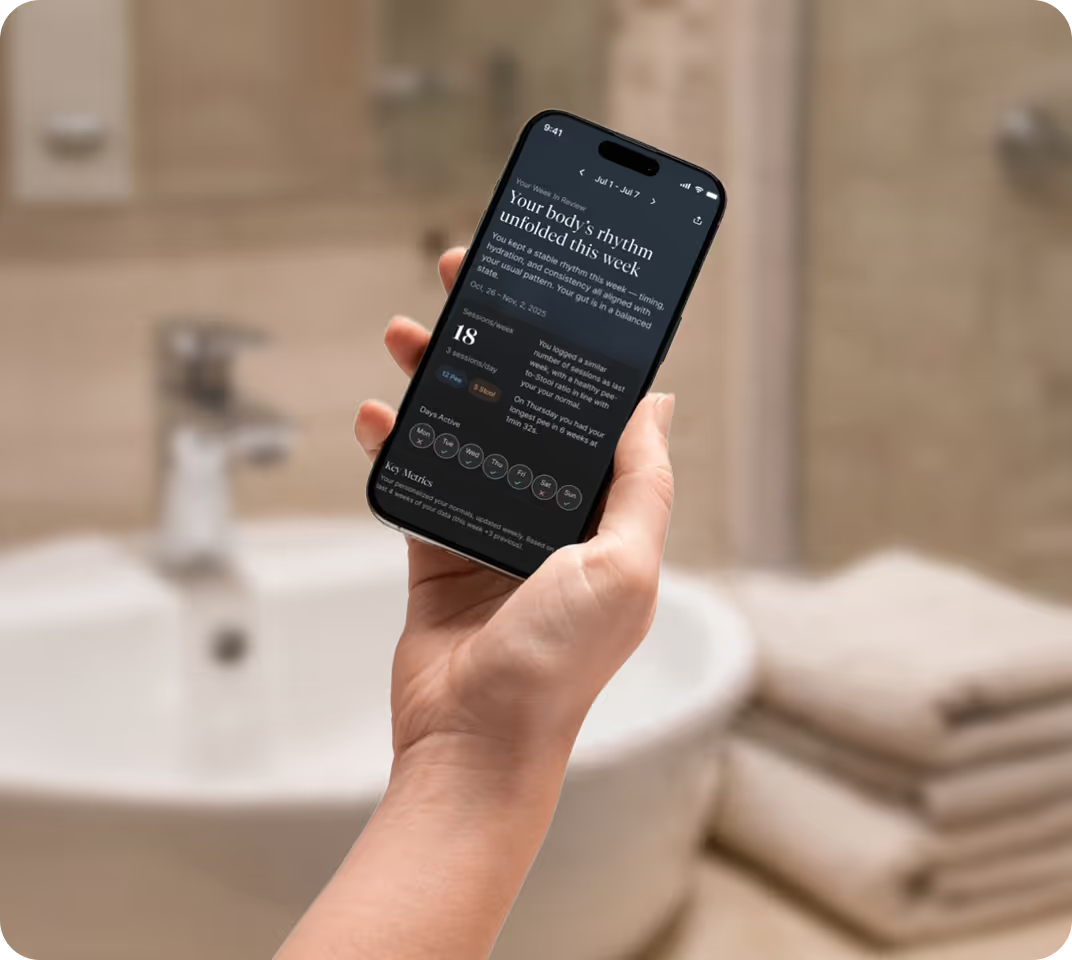
Your Body is Always Talking
You do your business. You see your data.
Throne is a smart sensor that clips onto your toilet and reads every session automatically — stool consistency, frequency, hydration, and regularity — without any logging. It turns the patterns you would never notice into personalized insight about your gut health and hydration.
Bonus: corn is your body's built-in stopwatch
Because corn is so easy to spot, it's a rough, low-tech way to measure your own gut transit time, the hours it takes food to travel from plate to toilet. Scientists have actually used it: in one study, 175 students ate whole-kernel corn and timed its reappearance, landing on a median transit time of about 29 hours, though individuals ranged anywhere from 1 to 99. That enormous spread is normal, which really goes to show that transit time varies a lot from person to person.
You can run the same experiment. Eat a spoonful of whole corn, note the time, and watch for when it appears. Somewhere in the range of one to three days is typical. Much faster and food may be moving through before it's fully processed; much slower and things are moving sluggishly. One fun wrinkle from that same study: the students who felt stressed and anxious during the exercise tended to have slower transit, a small real-world reminder of how tightly your gut and your mood are linked.
When it's worth a call to your doctor
Seeing recognizable corn, nuts, or seeds now and then is completely normal and rarely points to a problem on its own. What's worth a doctor's attention is a different picture: consistently seeing lots of whole, undigested food (not just fibrous skins and shells), especially alongside diarrhea, unexplained weight loss, or greasy, hard-to-flush stools. That combination can point to food moving through too fast or a problem absorbing nutrients, and it's worth getting checked. On its own, though, a few kernels in the bowl is just corn being corn.
Curious what your own transit time says?
Occasional undigested food is nothing to track. But if you're curious about your patterns, or something feels persistently off, transit time and stool consistency are exactly the kind of signals that mean more when you watch them over time than on any single day. Throne builds that picture in the background, so you can tell a one-off from a real trend worth mentioning to your doctor.
Frequently Asked Questions
Q: Why is there corn in my poop?
A: The outer skin of corn is made of cellulose, a fiber humans can't digest. Your body absorbs the soft inside and passes the tough shell through intact, so it comes out looking whole. It's completely normal.
Q: I see corn in my poop but I didn't eat corn. What is it?
A: Most likely it's corn from a meal a day or two ago, since food takes time to move through you. If not, it's probably a look-alike: undigested nuts, seeds, quinoa, or pepper skins can all resemble corn.
Q: Is undigested food in my stool a sign of a problem?
A: Usually not. Fibrous foods like corn, nuts, and seeds are meant to pass partly intact. It's only worth checking with a doctor if you're regularly seeing lots of whole food alongside diarrhea, weight loss, or greasy stools.
Keendjele, T. P. T., Eelu, H. H., Nashihanga, T. E., Rennie, T. W., & Hunter, C. J. (2021). Corn? When did I eat corn? Gastrointestinal transit time in health science students. Advances in Physiology Education, 45(1), 103–108. https://doi.org/10.1152/advan.00192.2020
DISCLAIMER: This content is for informational purposes only and is not intended as medical advice. Throne products are not medical devices and are not intended to diagnose, treat, cure, or prevent any disease. Consult your physician with any health-related questions.