
Oily, Fatty Poop: What Causes Steatorrhea (And What To Do Next)
One greasy stool doesn't mean much. What's worth paying attention to is the same thing happening over and over, for weeks.
Written by
Thomas Nelson
Published on
July 20, 2026
Overview
One greasy stool doesn't mean much. What's worth paying attention to is the same thing happening over and over, for weeks.


If you've looked in the bowl and seen an oily film, or a stool that's pale and greasy and won't flush, let's push pause on the panic Googling and start with what's true.
One greasy stool doesn't mean much. What's worth paying attention to is the same thing happening over and over, for weeks.
If that's what you're seeing, it's a good idea to make an appointment for a doctor's visit. Not because it's likely to be a scary diagnosis, but because it suggests you're not absorbing fat properly, and that has causes you and your doctor can find. Most of them are treatable once you know which one it is.
What is steatorrhea?
Steatorrhea just means too much fat in your stool. There's a formal number behind it, more than 7 grams a day, but only a lab can measure that. What you can see is the pattern:
- Pale or unusually light-colored
- Bulky and loose
- Oily or greasy, sometimes with a film in the water
- Strongly foul-smelling
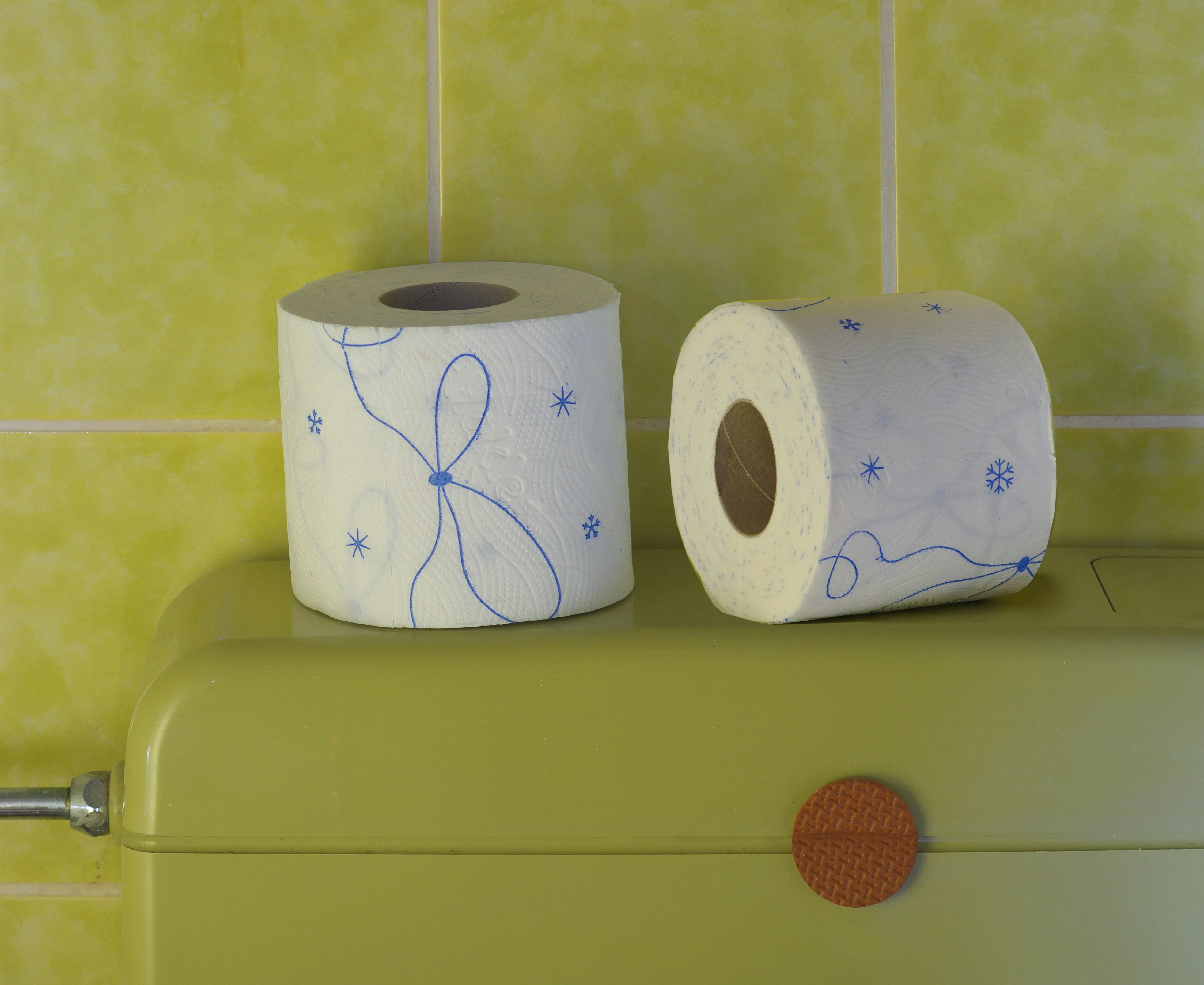
- Hard to flush
Floating shows up on every list, but ignore it. Plenty of healthy people have poops that float. It doesn't tell you anything on its own.
Stool that's gray or clay-colored is a different signal. That one points toward bile not reaching your gut, and it deserves a call to your doctor no matter what.
What causes steatorrhea
Absorbing fat takes three things working together: bile from your liver, enzymes from your pancreas, and a healthy intestinal lining.
Bile breaks fat into smaller droplets, like dish soap on grease. Enzymes chop those droplets small enough to absorb. Your intestinal lining does the absorbing.
Something has to disperse the fat, something has to break it down, and something has to take it in. If any of those isn't working, more fat leaves in your stool.
That's also how doctors sort out which of the three is failing.
Your Body is Always Talking
You do your business. You see your data.
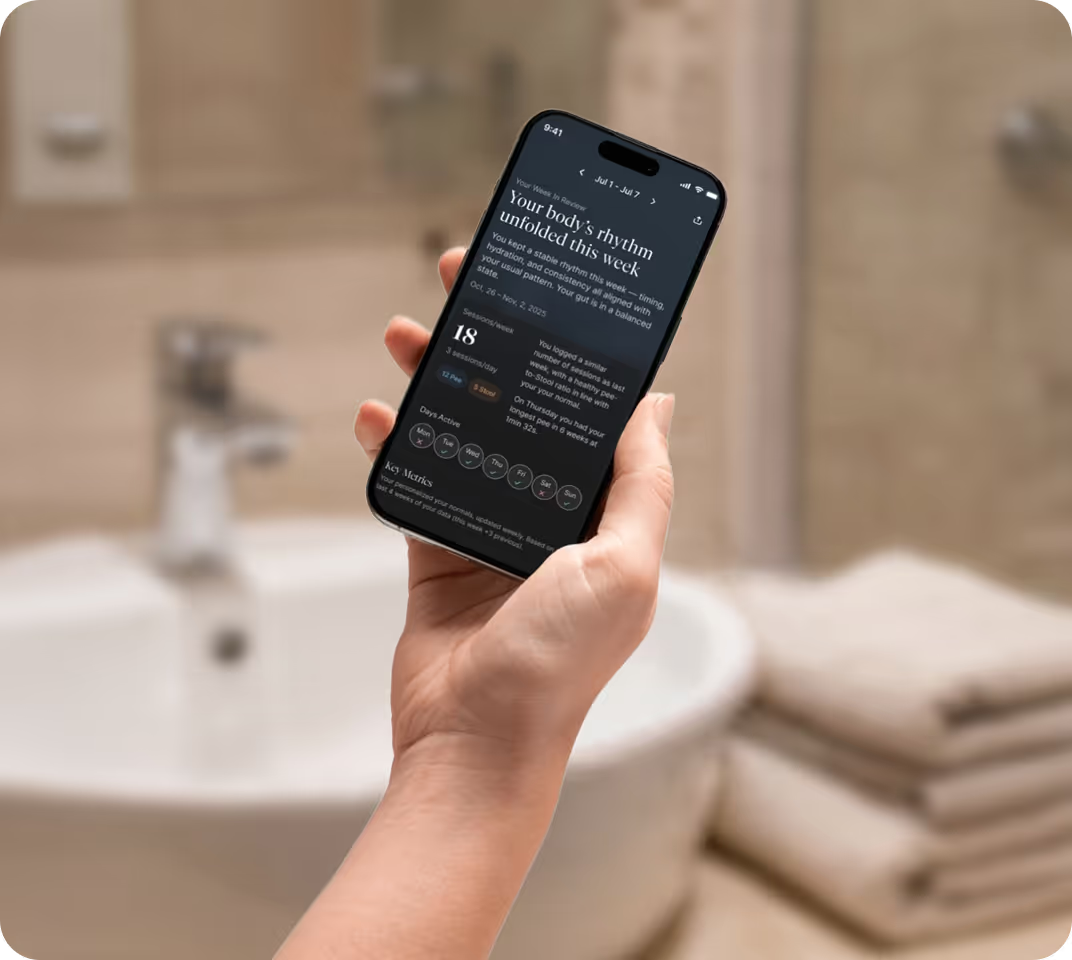
Throne is a smart sensor that clips onto your toilet and reads every session automatically — stool consistency, frequency, hydration, and regularity — without any logging. It turns the patterns you would never notice into personalized insight about your gut health and hydration.
The usual suspects
Your pancreas isn't making enough enzymes. This is called exocrine pancreatic insufficiency, or EPI. In adults, it usually traces back to chronic pancreatitis — and heavy drinking is its leading driver, with threefold the risk in US studies. In children, it's usually cystic fibrosis.
Not enough bile is reaching your gut. Some liver and bile duct conditions cause this. So does Crohn's disease affecting the lower small intestine, because that's where your body reclaims bile to reuse it. Break that loop and the supply runs down.
Your intestinal lining isn't absorbing. Celiac disease is the common one here. A few rarer infections and conditions can do it too.
Or it's a medication. Fat-blocking drugs like orlistat work by stopping fat absorption, so oily stools are the drug doing its job.
The outlook depends entirely on which of these it is, and some have a much better prognosis than others. Which is exactly why guessing from an article doesn't work.
Can't I just live with it?
Vitamins A, D, E, and K ride into your body attached to the fat you eat. When fat absorption drops, those vitamins can drop too. The consequences build to weaker bones, muscle loss, and weight loss even when you're eating fine.
Why steatorrhea gets missed
This diagnosis is often delayed by months or years, because early symptoms are vague.
Bloating, discomfort, loose stools, that's also the IBS picture, and IBS gets diagnosed far more often. A real absorption problem can sit filed under a functional one for a long time.
So if you've been told IBS and you're still passing oily, pale stools that won't flush, it's reasonable to raise it again.
What happens next
The testing is easier than you'd think. If your doctor suspects your pancreas, the usual first step is a single stool sample measuring an enzyme called elastase. No diet changes, no multi-day collection. There's a more thorough test that measures fat directly, but it takes days of controlled eating, so it's used less often.
And if it is EPI, the treatment is genuinely good. This is the part nobody tells you at 2am. You take capsules of the enzymes your pancreas isn't making, with meals. They do the job your pancreas isn't doing, and your doctor adjusts the dose based on how you respond. It's not a cure for the underlying cause, but it treats the malabsorption directly and well.
What helps most is walking in with specifics. Not "my poop looks weird," but how long, how often, what it looks like, whether anything changed in your diet or medications, and whether you've lost weight.
When to see a doctor
Make an appointment if oily, pale, hard-to-flush stools have been happening consistently for more than a couple of weeks. That's the whole threshold. You don't need other symptoms to justify going.
Go sooner if that comes with weight loss you didn't intend, ongoing belly pain, fatigue, gray or clay-colored stool, or yellowing skin. Same for any child with these symptoms, since growth can be affected.
Don't cut out fat to make it stop. It's the intuitive move and it's the wrong one. Cutting fat can make the stool look better while making your nutrition worse, which is why it's no longer recommended. It also hides the exact thing your doctor needs to see.
What to actually tell them
The hardest question in that appointment is the simplest one: how long has this been going on?
Most of us don't know. We remember this morning, we're fuzzy on last week, and past that we're guessing. Throne reads your stool form and consistency every session, so when something shifts, you know roughly when it started. It won't tell you what's causing it — that's a doctor's job with a lab. But knowing your baseline turns "a few weeks, I think?" into something useful.
Frequently Asked Questions
Q: What does steatorrhea look like?
A: Pale, bulky, loose, oily stools that smell strongly and are hard to flush, sometimes with a film in the water. Floating gets mentioned a lot but doesn't mean much on its own. One greasy stool isn't steatorrhea, it's the pattern over weeks that's worth checking.
Q: Is oily poop always serious?
A: Not always, but persistent oily stool is worth evaluating. Causes range from celiac disease, which is very treatable, to chronic pancreatitis. Fat-blocking medications cause it on purpose. The reason to go isn't panic, it's that the causes are findable and most have real treatments.
Q: Can steatorrhea be treated?
A: Usually, yes. If it's pancreatic, you take enzyme capsules with meals to replace what your pancreas isn't making. Celiac disease is treated with a gluten-free diet. Most causes have a specific treatment once identified, and it often includes vitamin supplementation.
Q: Should I cut back on fat if my stool is oily?
A: Not on your own. Cutting fat can make the stool look better while making your nutrition worse, and it's no longer the recommended approach. Ask your doctor before changing anything.
Q: Why does it matter if I feel fine?
A: Vitamins A, D, E, and K are absorbed along with dietary fat, so when fat absorption drops, theirs can too. Deficiencies build without you noticing and affect bone and muscle over time. Early on, steatorrhea is often mild enough to ignore, which is why it's worth checking rather than waiting.
Azer, S. A., & Sankararaman, S. (2023). Steatorrhea. In StatPearls. StatPearls Publishing. https://www.ncbi.nlm.nih.gov/books/NBK541055/
Tian, C., Ghodeif, A. O., Arshad, S., & Gillespie, E. (2025). Exocrine pancreatic insufficiency. In StatPearls. StatPearls Publishing. https://www.ncbi.nlm.nih.gov/books/NBK555926/
DISCLAIMER: This content is for informational purposes only and is not intended as medical advice. Throne products are not medical devices and are not intended to diagnose, treat, cure, or prevent any disease. Consult your physician with any health-related questions.